


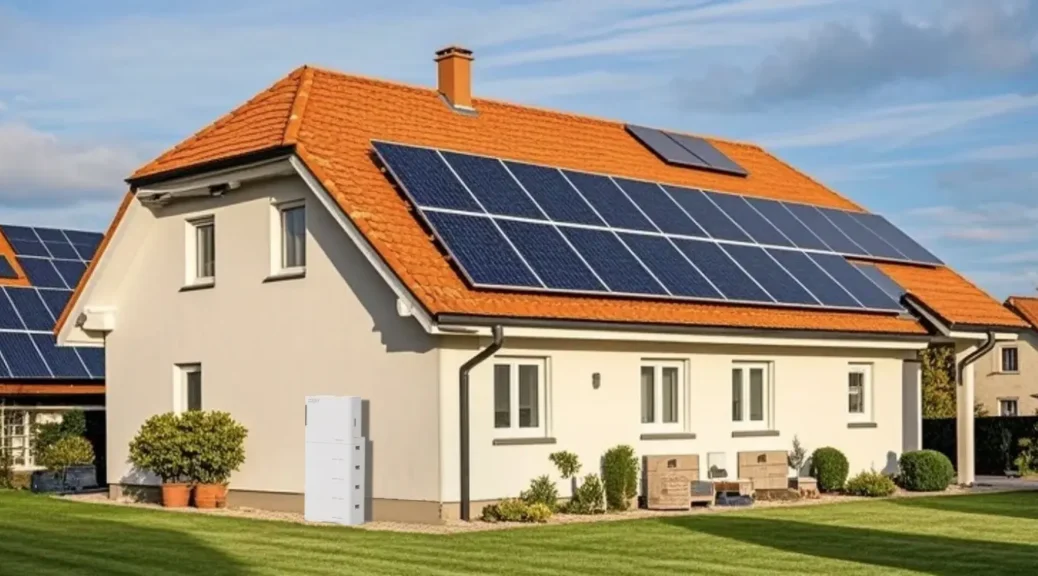
A home battery is easy to imagine during a blackout: lights on, fridge cold, phones charged. The harder part comes before installation, when the homeowner has to decide what the battery should actually power.
Define the Backup Goal
A solar battery backup system stores electricity from solar panels or the grid and supplies the home when needed. Some homeowners want backup for essential circuits only. Others want whole-home backup with load management.
The difference matters. Essential-load backup may cover a refrigerator, freezer, lights, Wi-Fi, outlets, and a garage door opener. Whole-home backup may include HVAC, well pumps, cooking, or larger appliances. Those loads require more power and more careful design.
According to NREL resilience research, the ability of solar-plus-storage to support outages depends heavily on load size, outage duration, and whether solar can recharge the battery.
Check Battery Capacity and Output
Capacity tells how much energy the battery stores. Output tells how much it can deliver at once. A battery with decent capacity may still struggle with high-power appliances if the inverter output is too low.
This is why homeowners should list the circuits they want protected before comparing equipment. A system that works well for lights and refrigeration may not be right for central air conditioning or a large well pump.
ESYsunhome’s HM5 and HM6 single-phase systems are positioned for residential all-in-one storage in the 5-6 kW range, while HM10 and HM12 support higher power needs. Homeowners comparing solar, storage, and backup can review a residential solar storage setup that brings those use cases together.
Ask About Solar Recharge
A battery without solar recharge has a fixed runtime. Once it is empty, it stays empty until grid power returns or another source charges it.
Solar changes that. During a daytime outage, panels may recharge the battery if the system is designed for backup operation. That can extend useful runtime, especially when the home limits consumption to essential loads.
The U.S. Department of Energy describes solar-plus-storage as a way to store solar energy and use it when solar production is low or grid power is unavailable.
Placement and Permitting Matter
Home batteries are not casual appliances. They must be installed according to electrical codes, manufacturer requirements, utility rules, and local permitting standards. Placement may depend on clearances, temperature, weather exposure, and emergency access.
NYSERDA notes that home battery systems are often cabinet-sized and may be installed in a garage, basement, exterior wall area, or yard depending on rules and site conditions.
Look for Usable Monitoring
A backup system should not leave the homeowner guessing. The app should show battery charge, solar input, household use, and backup reserve. During an outage, that information helps people conserve energy and avoid draining the battery too early.
Buy for Real Life
A good home battery does not need to power every appliance all the time. It needs to match the home’s outage risk, solar production, comfort needs, and budget.
The smartest purchase usually comes from a simple question: when the grid goes down, what must stay on?
